

Blogodocious ramblings of a landscape photographer living in Maine.
Photographing in the Pacific Northwest
Freeking Amazing!
Still catching my breath, readjusting my internal clock, editing, and trying to get over a cold that the lady and I picked up while out there.
A much more thorough and detailed report with multimedias will follow- check back tomorrow.
Totally amazing. Wow. :-)
"Photograph" a new Craft and Vision quarterly e-zine

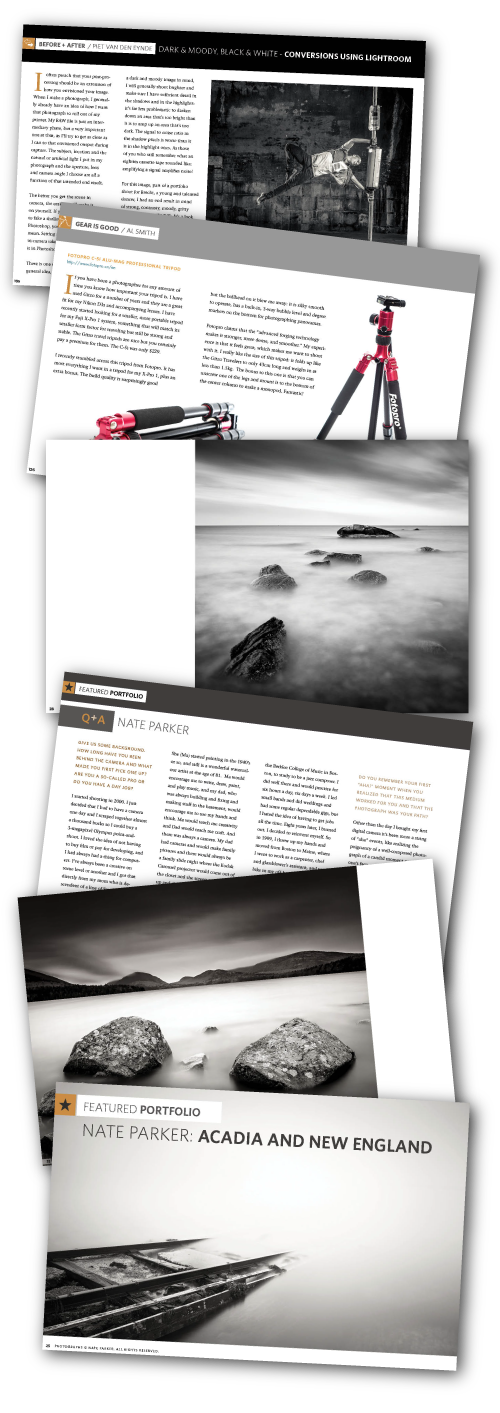 Jumping and clicking my heels out of happiness today as the first issue of "Photograph" a quarterly magazine for creative photographers is out by the Craft and Vision guys, and I get to see my name mixed in with the likes of some of my real hero's like Art Wolfe and John Paul Caponigro among others. Awesome! Still shaking my head in disbelief. http://davidduchemin.com/2012/10/introducing-photograph/
I've been following David duChemins work and blog for a couple few years now and like him for his inspiring words dealing with photography as a creative pursuit and after a while of reading and interacting through comments he's begun to feel like a real friend. I remember when he fell off that wall in Italy a year and a half ago and almost died that I was concerned for him like any of my other friends who I know in my life. I was going to meet him this last winter when he was supposed to swing through Maine on a epic road trip in his tricked out photo-Jeep, but those gendarmes at the border wouldn't let him in, bastards! Anyways my point is here that I feel like it's extremely important to make good connections in life and be real and nice and honest and sincere in your interactions with people- not to get, just to be. And sometimes the world will reward. Coincidentally since David has been communicating with me I've noticed a lot more black and white in his work and the addition of a ten-stop filter! Heheh- inspiration goes round and round.
Well I hope you folkies check it out- I talk about how my Ma taught me how to see and my favorite kind of beer among other things. And I wish I could give a copy to each of you guys for free, but they won't let me :-)
Going on an awesome photo trip for a bit so I'll be off the online for awhile but hopefully I'll have some new good content to share when i get back. Right then, have a great one my friends- keep on doing what you do and have a nice day -Nate from Maine, Usa.
Hurricane Sandy at Acadia iphone4 viddy
Back at home drying out the kit and washing the salt spray off the lenses and stuff so figured I'd put this up in the meantime- pretty cool waves out there this morning at lowish tide, plan on going back in a bit for high tide to see how that's affected things. Definitely the biggest waves I've seen here so far- not by too much but biggest nonetheless. Pretty cool stuff!
The Canon 24mm f/3.5 Ts-e: the Best lens for landscape shooters- hands down!
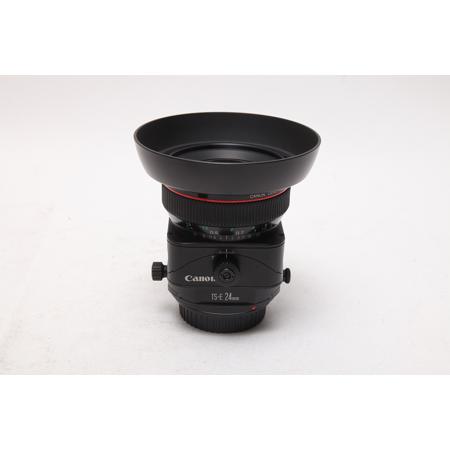
Canon 24mm f/3.5 Ts-e (tilt-shift) version I
This isn't intended to be a big-time technical review, more of just an experiential "this is what I think from using it for a year and a half" report. If you want the juicy technical bits then go here: http://www.the-digital-picture.com/Reviews/Canon-TS-E-24mm-f-3.5-L-II-Tilt-Shift-Lens-Review.aspx: I like the Digital Picture.com equipment reviews, but they don't have one for this version I. Right then, here we go!:
The best landscapers lens is:
1. A sharp lens. In this case it's a prime. Prime lenses in all things photographic that I've experienced are sharper. In my real life virtual experiential use of my Canon zoomer (a 17-40 f/4.0L), it's not a very sharp lens wide open, but who uses a wide-angle wide-open shooting landscapes unless you're Christopher O'Donnell http://christopherodonnellphotography.com/, and it's not very sharp at it's widest zoom- but stopped down and racked in a little makes it better. In the end it's horribly dull compared to my made in 1993 Canon 24mm tilt shift.
2. A wide lens- 50mm is good for street, 85 or 100mm is good for faces, 200 is good for reach, 300 is good for football and basketball -(front lens element too wide to fit through those holes in the glass at hockey rinks), 500 for birds, 24mm or less is good for landscapes. The challenge when shooting wide is of course the edges of your frame, there's much more chance of a bunch of crap sneaking into the image in a wide-angled shot then a medium shot, so check your edges religiously!
3. Is a weather sealed lens. herein: FAIL Canon tilt-shift lenses! Therefore I don't want to sell my 17-40, as well as sometimes I want the 35 or 40 mm for a little more reach, and often I'll like to shoot in bad weather for interesting environments and the hinges on the tilt shifters let water right in which could lead to the hideous mildew and I don't know what you would do then or how much it would cost to fix. The 17-40 f/4.0 that I use I will fearlessly drench probably simply because I don't love it as much as the wicked sharp 24 3.5!
4. Is a lens that inspires you to make photography! So check this out: when I first got my new-used Canon 24mm f/3.5 Ts-e a year and a half ago I was immediately impressed by the feeling that I was, for the first time in a long time, a photographer again instead of just a picture finder.
Right around the time that I first started using this lens I had "the change" from actually taking pictures to "making pictures". This concept is something that I've been aware of for a long time and I would say I was "making pictures" but really for some reason it wasn't until seemingly shortly after incorporating the 24 3.5 that I actually realized the idea personally in my work. Not to say that anything I made before this day was bad (Getty images :-)), but really feeling in control and finding my voice as it were waited until then. And this is after twelve years of shooting! I would put a lot of the emphasis on finding that confidence in the Canon 24mm f/3.5 Ts-e. Either that or it was a big coincidence!
Here's the first disclaimer- I know the Nikon AF-S Zoom Nikkor 14-24mm f/2.8G ED AF Lens is a mean Mean lens- and I would put that as what sounds to be the ultimate in landscapers zooms (although apparently there is a filter issue due to the bulging and large front element) that makes it difficult but not impossible to filter. And this is a lensing standpoint from a DSLR body perspective where large format guys and Pentax 67's would make altogether different claims as to the best lens, back to the Canon 24!:
I bought it for myself for my birthday last year (June 2011), and I got the original version used from B+H, not version II- which (24mm f/3.5L II) is about $1000 American dollars more- so to clarify: I'm recommending the original version unless money is no option- and where the new version is better, it's not $1000 dollars better, it's not $1000 dollars sharper: (the made in 1993 lens that I acquired is Wicked sharp!, amazingly sharp!, sometimes even too sharp feeling if that's at all possible). The version II is definitely not weather sealed just like the original, which is a real point of concern in many situations. It does have a touch less vignetting apparently, it does have a new form of lens adjustment, it is probably a hair sharper, but then it has an 82mm filter thread which may be an expensive inconvenience for those of you used to 77 mm filters... (the 24 3.5 is a 67mm thread which I accommodated to my 77mm filters with a filter adaptor which I permanently jammed crossthreaded in a below-freezing morning on the ocean down on Cape Cod, so that's all taken care of :-)) and the construction of the new version II seems just a little bit more high density modern plastic amalgamation then the chevy steel feeling metal that the original version has. And the money that you'll save getting the cheaper used old 24 can be put to good use taking a trip somewhere amazing to make test shots! Huzzah!
Personal impressions: The first thing that blew me away was the red velvet lined leather hat-box style case that lens comes in- which is wicked cool! The next thing was the palpable sharpness that you feel through the viewfinder, there's nothing like sharp glass, I don't mean to be a prime fan-boy but I swear zooms just feel dull in comparison- I'll probably come around someday, and different focal lengths on different zooms are perfectly sharp, and I have had an amazing experience with the Canon 70-200 f/2.8L USM IS II which is also ridiculously sharp, and I know that most 24-70 2.8's are also super sharp, so I'm probably just hating on my 17-40 f/4.0. But like I said I want to keep it for the rain and snow. Right then, the next thing, which is my favorite thing about this lens, is that using it you feel like a photographer anew, like I said before. This is what I mean: after a while of photographing you become familiar with your gear and the approach that you take when shooting. You approach scenes in the same way. After a while the camera operating becomes rote and formulaic which is good because you're not guessing and you're getting the shot- but shooting with a tilt shift gives so many seemingly infinite optical options to play with composition and selective focus that like I said you feel like a photographer again instead of just an image recorder.
Here's some of the features that I like about the 24mm f/3.5L (original version): it's chunky and hefty and has a square lens barrel behind the focussing ring- which just looks cool, the focusing ring is solid, big and grippy, and has a long throw and it's a manually focusing lens so it has stops which is useful for video and just makes sense: I really don't like how the Canon USM lenses focussing rings don't have stops, I guess it has to do with magnets or something but it's just not natural!- and this lens works a treat for scrumptious wide angle shallow depth of field in video by using a little bit of tilt. Right then, before I get into the other uses I should explain the terminology.
Tilt: Tilt is the swivel hinge that actually tilts the front lens element off axis up to 8 degrees which looks like this at f/8.0.
Tilt isn't just good for the miniaturization effect that we've all seen in timelapses, of more usefulness though it is what you do to achieve "the Scheimpflug principal": http://en.wikipedia.org/wiki/Scheimpflug_principle. The Wikipedia states: "The Scheimpflug principle is a geometric rule that describes the orientation of the plane of focus of an optical system (such as a camera) when the lens plane is not parallel to the image plane. It is commonly applied to the use of camera movements on a view camera. It is also the principle used in corneal pachymetry, the mapping of corneal topography, done prior to refractive eye surgery such as LASIK, and used for early detection of keratoconus. ( I did not know this!). The principle is named after Austrian army Captain Theodor Scheimpflug, who used it in devising a systematic method and apparatus for correcting perspective distortion in aerial photographs." ...Take note of that last bit: the point here is that using just a couple of degrees of downward tilt (there are crazy equations and all as to how to figure the exact amount at a particular camera height (film plane)) to get the results, -but we can all just use live view- the Scheimpflug principle is used to achieve a massive depth of field from foreground to background. So per example: say you are in the gorgeous wildflower filled meadow at the base of a crazy awesome dramatic snow capped mountain and there is a breeze that is shuffling the flower heads and you want a faster shutter speed to freeze the flowers: you can tilt the lens a smidge and open the aperture for a faster shutter speed and still have the clarity of a classic landscape style depth of field that you would otherwise have had to shoot at f/16 or smaller to achieve. But I don't really do that much. The one occasion that I can recall recently that I was really enjoying that effect was when I was shooting sand ripples on a beach and I wanted to give the effect of seeing it as a passenger in a jet plane would see a landscape from 25000 feet- using tilt I was able to give the feeling of a distorted sense of scale and get that effect that I was looking for. 
"Sand Beach Texture -3" two images stitched shot locked off on a tripod @2 feet altitude.
I more often use the tilt feature to put the focus plane on say a ledge of granite jutting out into the sea at an angle- I can tilt the front element and rotate the lens to 45 degrees or so- (the Ts-e's move in 3 ways: (1.) Tilt. (2.) Shift (up and down). And (3.) Rotate.), to put the ultra sharp plane of focus just on the rocks and blur everything else in the foreground and background. Or how bout this one: portrait. Say the subject is posing 3/4's and you still want a wide open portrait style aperture: you can open up and tilt and rotate to the plane that the eyes are on. Or take product photography as an example: you have to shoot a watch at an oblique angle and you want to blur the background- tilt and wide apertures are the trick. Those are the main reasons that optical tilt is superior to digital tilt as a filter in post production. You just can't replicate the combination of elements that a physical lens will give you. And don't forget the wicked sharpness!
Shift: shift fixes keystoning, shift straightens the straight lines that are all leaning back because you were angling the camera and film plane up to get the top of the frame in the picture. The digital filter version of this will invariably crop off too much of the original scene in order to make the lens corrections and it will wreck the composition that you intended. Of course then you could use Photoshop to add some canvas to the image and maybe content aware fill the rest, but you know what I mean. The classic analogy to explain shift is that you shift the lens to keep your buildings from falling over backwards. My first really satisfying found image using this technique that I was able to capture was this one of the Indian River Grange in Addison Maine that I found on the way to make seascapes off Jonesport last fall: 
"Indian River Grange" Addison, Maine.
What attracted me to this scene was the 3/4's light that was making strong contrasts of all the textures and lines of the face of the grange. I ended up thinking on this shot for about 2 more miles before I u-turned to go back and get it. It's not perfect because the straight lines still have just a touch of leaning back- (if my memory serves I got carried away with adjustments and forgot my original objective therein, oops!) But it was the first time I remember seeing the real potential of shift. I was standing only about 15 yards from this building at the edge of a road so I couldn't back up anymore to compress the scene so the tilt shift was invaluable here otherwise keystoning would have put lots of distortion in the shot from angling the camera upwards. In the landscape we can also use shift to straighten the trees, even without trees I still compose level and shift the horizon up to where I want it- the effect just gives you a different sense of scale and perspective that just feels more natural. So, are you beginning to see the possibilities?!
Another really useful feature of the ts-e's are panoramas, or just simply getting a wider frame that only a 14mm or less would give. I'll often stitch 3 shots shifted either in vertical orientation for a wide shot or horizontal for a tall shot (I'll show you what I mean) -of which both will produce a 4x5 crop, or less often, a much more narrow 3 shots shifted in horizontal orientation that will make a true panorama. You can also shift into the corners making a really massive square format file that will print huge by shifting diagonally. Cool. But that would take 9 shots and the changing light and moving landscapes that I shoot would be a stitching disaster so I refrain from that game. 


 "Beyond the Treeline"


Now I gotta eat my words Tony Sweet.
 "Hadlock Falls at Waterfall Bridge in Acadia" 10/20/12
Right then- so here we are: it's rained an unexpected 2.5 to 3 inches overnight (this was yesterday morning (Saturday)), and I had recently been reminded of a great location in Acadia to shoot which is Waterfall Bridge, which is in the timelapse that I embedded in a previous post here that I made like in 2008 or so, but I hadn't been back there since. With the deluge it occurred to me (I wouldn't be a very good captain obvious), that Waterfall Bridge should be kickin- so I headed over right after the 14 hour downpour stopped and pulled into the parking lot at the carriage trail trail head and what do mine eyes behold- there was a photo workshop gathering. My reaction was something like "oh you've gotta be kidding me"- because I wanted to really geek out up there and the shots I was thinking of doing were right smack in front of this forty foot falls so that would be right in the way of these eager paying peoples, so I did what a white-tailed buck would do with a tripod and a backpack full of gear and high tailed it right on up there. Which isn't a breeze cause it's all up hill- and I could hear em all behind and below me on the switchbacks all enthusiasm and clanking tripods, hoofing it themselves, taunting me in the opposite way that one of those little mechanical bunnies taunt those poor greyhounds-
Yeah, so last week I was going on about how it's no biggy to have to share a scene with other shooters because everyones vision is different and where this guy is going to do an hdr and this lady is going to do some abstract dance movement thing and that guys gonna set some steel wool on fire and spin it around or whatever and on and on at least you have safety in numbers: http://nateparkerphotography.com/blog/2012/10/shooting-the-icons--a-response-to-tony-sweets-blog-it-s-crazy-out-there, that time was on a beach on the ocean, this time the environment was just too small! It was a Les Picker workshop. This is him: http://www.lesterpickerphoto.com/content.php?page=about I hadn't heard of the fellow before but apparently he's got some cred's. Shook his hand, nice fellow. And a nice group too. Everybody was all charged and psyched to be there even though it was pretty damp and occasionally raining. They were communicating to each other nicely cooperatively to try to keep out of each others shots- I'm telling you all this cause obviously I wasn't able to get there in time to get the place to myself, got sidetracked at a bridge and stream on the way so, I shared it with them. 
photography workshop at Waterfall Bridge in Acadia. Iphone4. Lookit this place: freekin beautiful!
The thing is is that I really get used to the off season around here- then there is nobody out there shooting. Some crows, some red squirrels and an occasional hiker- I could have the place to myself for a few hours at a time and take the time to actually find my shot. That'll be in two more weeks. Everybody has a different process but if you're going to hike up to a sweet spot and make shots of a fleeting moment- you're going to want to cover your bases. I hate it when I get back and I'm looking through the images on the card and I realize that I wish this was shot wider or that was shot more to the right or something, that's where really taking your time comes in. Not to mention that it's just nice to appreciate a place sitting down by yourself without looking through a camera and take the time to listen to the falls and stuff like that- so I hear ya Tony, it's crazy out there! In obvious deference to that last point here's the google maps link if you wanna go find it yourself:
View Larger Map: you can see my house from here!
In the end I got a few shots that I like- I think my favorite might have been an Iphone shot with Hipstamatic of pine needles laying in a circular depression of one of the granite buttresses of one of the bridges: 
"Symbols"
I was looking for more waterfall detail extracts like and this one came out pretty close to what I was looking for: 
"Hadlock Falls Detail"
And while I considered the wide shot of the bridge itself, there were too many shooters in that position and actually the bridge just before Waterfall Bridge which is only maybe 300 feet away has a nicer feeling character I think, so that's this, or this is that, whichever you prefer:
"Maple Spring Bridge Acadia"
And with that I was out- I'd planned to spend more time there like I said, but that'll be another day. Two hours up there in the end. And then on the way home I found the best shot of the day in my opinion- coming over a rise I looked out toward Somes Sound (photographers are inherently dangerous drivers), and saw a little mini island out in the fog that was screaming to me to make a long exposure of it, a few u-turns and a touch of a little trespassing and some more soaked shoes put me right in front of it on the shore where I got off 8 or 10 shots before the driving rain started back up and my battery was dead, and I was feeling pretty good about myself at that point. What's the expression?: "there's richness in scarcity"? is that it?- I don't always shoot landscapes in the fog, but when I do... (thinking of the Dos Equis commercial with the 'Greatest Man in the World'...) Whatever, you know what I mean. 
"Islet in the Fog- Maine" 10/20/12
If I could have my way there would be fog every shooting day for at least 6 hours~! You California guys got it made! Unless I'm wrong about that.
Anyways, that's it for now- thanks for stopping by and have a good one- Nate!
P.s. By the way, if anybody is interested in taking a workshop with Me, call me up! http://nateparkerphotography.com/photography-teaching